Snorkeling in Punta Cana starts on a boat, not on your beach towel
Snorkeling in Punta Cana is mostly done from a boat, because the reef that keeps this coast's water calm usually lies about half a mile offshore, too far to swim. The realistic choices are a half-day trip from the Bávaro beaches to a reef off Cabeza de Toro or Bávaro, or a full day to Catalina Island off La Romana, and this page sets out what each one shows you, when the sea cooperates, and how it fits a condo at Poseidonia in Cana Bay, about 5 minutes from the beach.
Where is the reef, and why does snorkeling here mean a boat?
A coral reef runs along the Bávaro coast and breaks the ocean swell well before it reaches the sand, which is why the water off these beaches is usually calm enough to wade into. A long-running Punta Cana travel resource that reviews the local snorkel trips places that reef usually about half a mile off the coast, too far to swim, and draws the honest conclusion: no resort here has great snorkeling directly in front of it. The calm, shallow water between the reef and the beach is made for swimming and floating, not for watching fish.
So the useful question on this coast is not which beach, but which boat, and to which reef. The same resource steers snorkelers past the standard tour stop to a reef off Cabeza de Toro, south-east along the coast from Bávaro. It lists parrotfish, sergeant majors, butterflyfish, yellow snappers, squirrelfish and angelfish among what you can see there, notes that the reef is part of a restoration project, and puts it more than 2,000 feet from the closest beach access, which settles how you get there.
Can you snorkel from the beach anywhere on this coast?
In a few places, and modestly. A little reef sits close to the sand in front of a few resorts at Cabeza de Toro, near enough to reach on foot; expect a few fish and, with luck, a turtle, not a colorful reef. Around Bayahibe, on the south coast, some smaller and partly artificial reefs can be reached from the shore, and the travel resource does not oversell those either. Everywhere else on the hotel strip, the reef is out of a swimmer's reach.
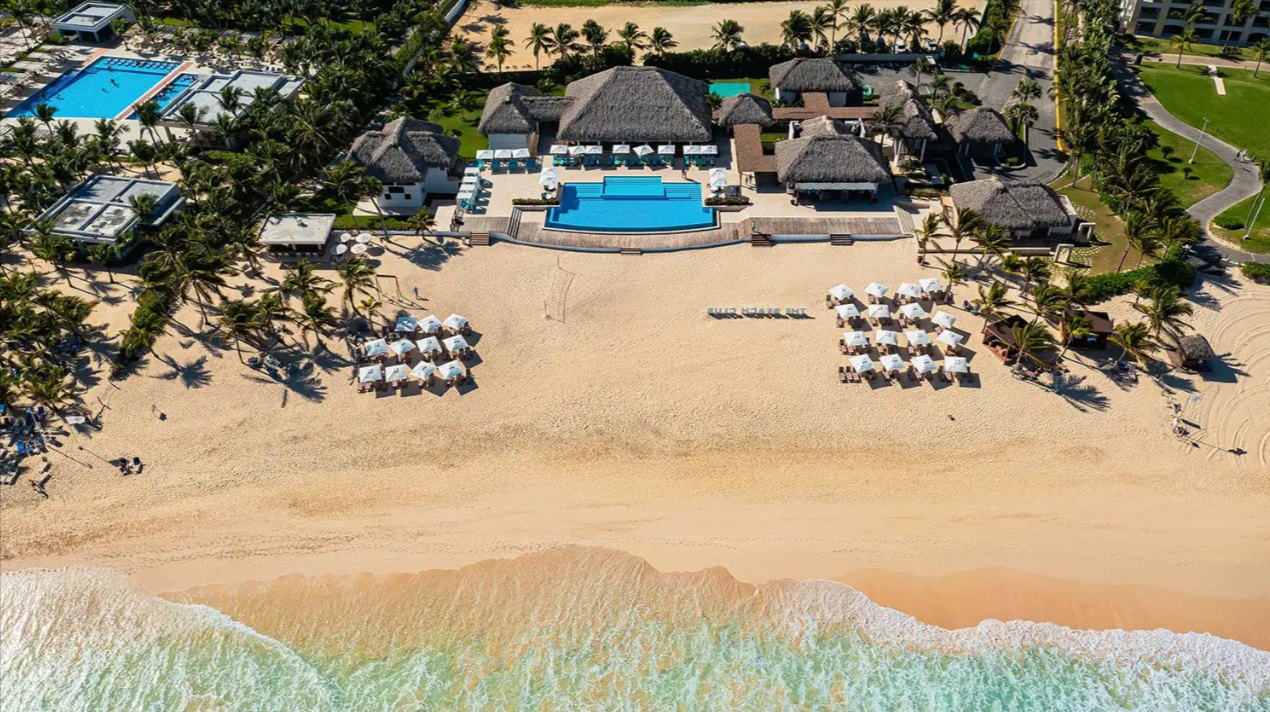
The beach nearest Poseidonia is not one of the exceptions. Arena Gorda, the shore in front of Cana Bay, takes more wind and wave than the sheltered coves round the cape, which is why boards and kites gather there: good water for a morning swim and a long walk, poor water for floating face-down over coral. Macao, further north, is the surf beach. The snorkel boats work from the Bávaro beaches to the south: El Cortecito, one of their departure points, is roughly 7 miles down the coast in a straight line, and the beach at Cabeza de Toro roughly 9.6 miles.
Which half-day boat trip actually reaches a reef?
The usual way to snorkel here is a half-day boat trip from the Bávaro beaches, and two quite different outings are sold under that one word. On the first, a guide gets in the water with you, briefs the group before anyone jumps and gives you real time over a named reef. The second is a quick dip from a party boat, usually paired with a stop at a shallow “natural pool” where everyone stands around in the water. The travel resource is blunt about the little reef off Bávaro where some of these boats stop: the fish crowd in because the tours feed them bread, so most of what you see is a single species. It also advises against the attraction where visitors swim with stingrays and nurse sharks in a fenced-off area, on animal-welfare grounds.
Its comparison of the trips, with prices it marks as approximate, puts a party boat with a quick snorkel stop at about $70 a person, a small-group catamaran capped at 16 passengers at about $100, and the trips to the Cabeza de Toro reef with lunch at about $115, each lasting 4-5 hours with hotel transfers. Those are one publication's figures, revised in November 2025, not a price list, and booking sites show wide spreads for what looks like the same day out. Before paying, ask four questions: the name of the reef, how deep the water is there, how long you get in it, and whether a guide swims with you.
Two facts shape what you will find under the surface. The reef is in poor shape: a July 2024 news report in the Dominican press, drawing on a foundation's findings, put average live coral cover in the Punta Cana tourist area below 10% in 2020, and a restoration group in Bávaro now grows coral in nurseries from fragments the waves break off. And since 2024 the Ministry of Environment has protected about 7.1 square miles of the reef lagoon off Bávaro as an ecological recovery area for endangered sea turtles, limiting boat speed and access and banning fishing and anchoring inside it. The turtles are the reason it exists; seeing one is luck, not a promise.
Is a Catalina or Saona day worth it for snorkeling?
Catalina Island is the day trip for snorkelers. Protected as the Isla Catalina Natural Monument, the island sits about 1.5 miles off the mainland near La Romana. Trips drive to La Romana, around 1.5 hours from most of the resort strip, then cross by catamaran, stopping on the way at a reef known as The Wall and leaving time to snorkel off the island's beach; sergeant majors, damselfish, squirrelfish and stingrays are among the species the travel resource names. Plan on 8-10 hours door to door. Its listings start from about $75 a person for a standard group trip from Punta Cana and from about $130 for a small-group premium one.
Saona is the more famous day out and the weaker snorkel. The island lies inside Cotubanamá National Park, formerly Parque Nacional del Este, and is reached by boat from the Bayahibe area. Some tours stop at a wreck and an old jetty where a few fish live, the travel resource calls the snorkeling there subpar, and some companies have dropped the stop altogether. Go to Saona for the beach and the boat ride. When the boat pauses at the shallow stop known as the natural pool, leave the sea stars where they are: photograph them underwater, and never lift one out of the water.
Both islands are protected areas, and in 2023 the Ministry of Environment ordered foam and single-use plastic eliminated from Cotubanamá National Park and the Isla Catalina Natural Monument. Take a refillable bottle, and carry your rubbish back to the boat.
When is the water warm and the seaweed light?
The sea is warm all year, but not equally. Modelled long-run averages put it at about 79°F in February and March and about 84°F in September and October, a difference you notice over an hour of floating rather than in a quick dip; a long-sleeved rash guard or a thin wetsuit top makes the cooler months comfortable. Sargassum, the floating seaweed that drifts onto this coast, decides more snorkel days than the temperature does. The same travel resource's seaweed guide finds October to December the least likely months, with seaweed in only four or five of the last 14 years, and June to August the most likely; 2025 was an exceptional year. It also reckons floating weed seldom spoils a boat snorkel, because a patch rarely drifts over the reef at the moment a group is in the water.
Weather moves more trips than visitors expect. Hurricane season runs from June 1 to November 30, October is on average the wettest month at about 6.0 inches of rain, and wind, swell or poor visibility can shift a snorkel stop or cancel a day at short notice. We found no published visibility measurements for this coast; one dive centre at Cabeza de Toro rates its reefs' visibility as good in most months, clouded now and then by the winter trade winds or a heavy summer shower and badly cut mainly after a storm, and describes the sea as smoother in summer, with more chop once the winter trade winds set in. Book reef days early in a stay rather than the day before your flight, and get the reschedule rules in writing before you pay.
| Months | Average sea temperature | Sargassum pattern |
|---|---|---|
| January–March | 79–80°F | Varies by year; it has arrived as early as January |
| April–June | 80–82°F | Some years it only starts in April or May; June opens the peak |
| July–September | 83–84°F | The peak runs from June to August |
| October–December | 81–84°F | Least likely: seaweed in four or five of the last 14 years |
How do you snorkel here safely, and what should you pack?
Treat the open sea as the open sea. Global Affairs Canada's advice for the whole country is that coastal waters can be dangerous, that tides and strong winds can cause riptides, and that lifeguard and rescue services do not always meet Canadian standards. On a reef trip, stay close to the guide and the boat; from the shore, never snorkel alone and keep well clear of the lanes where boats come in and out. Ask for a flotation vest whether or not you swim well: it lets you hang still instead of kicking, which is easier on you and on the coral. For a child or a non-swimmer, ask before booking whether they can stay safely aboard and what they will do while everyone else is in the water.
The reef's own rules fit on one line: hands off the coral, feet off the bottom, no bread for the fish, and nothing that swims gets chased or picked up. We could find no Dominican rule on sunscreen ingredients, but Hawaii and the US Virgin Islands have banned the sale of sunscreens containing oxybenzone and octinoxate to protect coral, so a mineral zinc-oxide cream is the simple choice here. A long-sleeved rash guard is better still, because it covers the back and shoulders that face the sun the whole time you float.
Trips lend masks and snorkels, but a mask that fits is the difference between an hour of looking and an hour of clearing water. What to pack:
- your own mask if it seals well, and test any borrowed one at the pier, not offshore;
- a long-sleeved rash guard and mineral sunscreen;
- water shoes for rocky or reef-edge entries from the shore;
- a dry bag for your phone, and a towel;
- if you wear glasses, ask before booking whether the trip carries prescription masks.
What does this mean for an owner at Poseidonia?
Poseidonia is a development of 1,319 condos inside gated Cana Bay, from $179,000, with 20+ pools and delivery projected for 2028. For a snorkeler the address sorts itself out quickly: Arena Gorda, about 5 minutes away, is the beach for swimming and walking; the reef boats leave from the Bávaro beaches to the south; and the island days begin with a long drive. Bayahibe, the jumping-off point for Saona, is roughly 34 miles from Poseidonia in a straight line and Catalina Island roughly 42, and Cana Bay sits towards the northern end of a long hotel strip, so check that a trip collects from it at all. Some trips pick up only in listed zones, and pickup times can differ by about an hour from one end of the strip to the other.
Owning changes how you snorkel more than where. A visitor gets one roll of the dice with the weather; an owner can watch the forecast and the seaweed reports, pick the calm, clear morning and go then. Keep your own mask and rash guard in the condo, try a guided reef trip before judging the coast by a party-boat stop, and save Catalina for a settled day between October and December. Owners who rent the condo out can hand guests the same brief: book the guided reef trip early in the stay, and check the pickup zone. None of it is an amenity of this development: the reef belongs to everyone, and parts of it are protected. It is part of the coast you are buying into, and it rewards the people who live close enough to choose their day.
Common questions
- Can you snorkel from the beach in Punta Cana?
- Mostly no. The reef that shelters this coast usually lies about half a mile offshore, too far to swim, and a long-running local travel resource says no resort here has great snorkeling straight off its beach. The exceptions are small: a little reef close to the sand at Cabeza de Toro, and partly artificial shore reefs around Bayahibe on the south coast. For real coral, take a boat.
- Which snorkel trip from Punta Cana is worth booking?
- For a half day, a guided trip to the reef off Cabeza de Toro, which one travel resource rates as more varied than the reef stop most tours use and which is part of a restoration project; it lists those trips at about $115 a person, against about $70 for a party boat with a quick snorkel stop. For a full day, Catalina Island has the better reef. Saona is a beach day whose snorkel stop is weak or no longer offered.
- Is snorkeling in Punta Cana suitable for beginners and children?
- Yes, on a guided trip: the reef stops are usually shallow and the guide sets the pace. Ask for flotation vests, check that masks come in children's sizes, and ask before booking whether a non-swimmer can stay safely aboard while the others are in the water. Canada's government warns that lifeguard and rescue services here do not always meet Canadian standards, so keep children within arm's reach.
- What time of year is best for snorkeling in Punta Cana?
- It is a trade-off between warm water and seaweed. Modelled averages put the water at about 84°F in September and October and about 79°F in February and March, while sargassum is statistically least likely from October to December and most likely from June to August, inside a hurricane season that runs from June 1 to November 30. November and December combine warm water with the lowest seaweed odds in that record; treat any month as a tendency, not a forecast.
- How far is the snorkeling from Poseidonia?
- The beach at Arena Gorda is about 5 minutes from Poseidonia, but it is a swimming and wind beach rather than a reef. The reef boats leave from the Bávaro beaches to the south, where El Cortecito, one of their departure points, is roughly 7 miles down the coast in a straight line. Catalina Island is roughly 42 miles away on the same measure, a full day that starts with a road transfer to La Romana.
Want the details for your own situation?
Ask about availability, layouts or the buying process, and someone from the sales team will get back to you.
Get in touch