Macao Beach: a public beach with a village behind it, not a resort
What Macao actually is: a public beach with a village behind it
Macao — Playa Macao on the road signs — is open to anyone, with no gate and no entrance fee. The tourism ministry describes it as the principal public beach of the Punta Cana to Uvero Alto coast and puts its footfall above 200,000 visitors a year, which is a great deal of traffic for a stretch of sand that no resort chain organises.
What makes it feel unlike the rest of this coastline is what stands behind the sand. Along most of the strip the land immediately inland belongs to hotels, so arriving at the beach means walking out of one. At Macao the village of El Macao sits directly behind the bay and a single resort occupies one end of it, which means the way in is a public road to a public car park. The ministry rebuilt both, finishing in 2022: 86 car spaces and 14 coach bays, with public bathrooms, benches, lighting and planting, at a reported outlay above RD$53 million. The arrival is not manicured. It is, though, an arrival you can make in your own car on a Tuesday without asking anybody's permission.
Why this bay behaves differently from the rest of the coast
The bay faces north, and a small headland closes its eastern side. That geometry matters more than it sounds. The current that carries sargassum onto this island runs in from the east, and the beaches that catch the worst of it are the ones facing into that current. Macao is not one of them. A long-running Punta Cana travel resource that tracks seaweed along this coast estimates Macao is affected roughly 10-20% of the time, against a much higher share on the east-facing beaches to the south, with June to August the heaviest stretch of a sargassum year.
Read that as a tendency rather than a forecast. Volumes swing from one year to the next, no agency measures this particular bay, and anyone who promises you a clear week is guessing. But the tendency is the useful part: in a week when the strip is having a bad time of it, Macao is where people drive, and it is often still clean. Knowing that is worth more than any photograph of it.
The surf, and what a two-hour lesson actually buys
Macao takes more wind and more swell than the sheltered stretches south of it, which is why the surf schools set up here and not there. Several work the sand, teaching people who have never stood on a board, and the format is consistent between them: two hours, foam boards and rash guards provided, hotel transfers included. One long-established school publishes its rates openly, from $100 a person in a group and from $125 one-to-one, though those are a single operator's starting prices read on a single day and are worth confirming before you arrive.
Two hours is a session, not a course. What most people take away is a first ride in the whitewater and a clear sense of whether they want a second lesson. What it is not is a flat-water swim. The qualities that make a beach teachable are waves, and they do not switch off for the non-surfers in the party, so if half the group wants glass, split the day rather than the beach.
The water, and the part most beach pages skip
Lifeguards are posted at Macao by the Verón–Punta Cana municipality together with the local fire service, and the beach is used as an operations centre when the municipality runs its holiday beach-watch. That cover exists for a reason: local reporting has documented drownings here, and has documented leaner years in which the lifeguard team was short of both people and rescue equipment.
No authority publishes wave heights, current speeds or a flag system for this bay, so this page will not invent one, and it will not tell you the sea here is calm or that it is treacherous. What does follow from the documented record is short and practical. Swim within sight of a staffed post rather than at the empty end of the sand. Look at the water before you get into it, and look at where everybody else is standing. Do not be the furthest person out. And if you are here for a lesson, the briefing is the local knowledge — it is most of what you are paying for.
The day has a shape: buggies at midday, Sundays for Dominican families
Macao runs to a timetable nobody prints. Buggy and quad excursions out of the resort strip use it as their beach stop, so the middle of the day is when the bay is fullest and loudest, with groups arriving and leaving in waves. Sunday belongs to Dominican families, which is the day it is at once at its most local and its most crowded. A midweek morning is the quiet version of exactly the same place.
The food is half the appeal and half the planning. A row of open-air eateries stands on the sand near the eastern entrance, grilling and frying fish and serving it with rice, beans, salad or plantains at around $10 a plate. Several take cash only, and vendors work the sand with snacks. None of this is resort service and none of it pretends to be: bring pesos, expect to be approached, and remember that a friendly no is a complete sentence here.
What a beach like this is worth if you own at Poseidonia
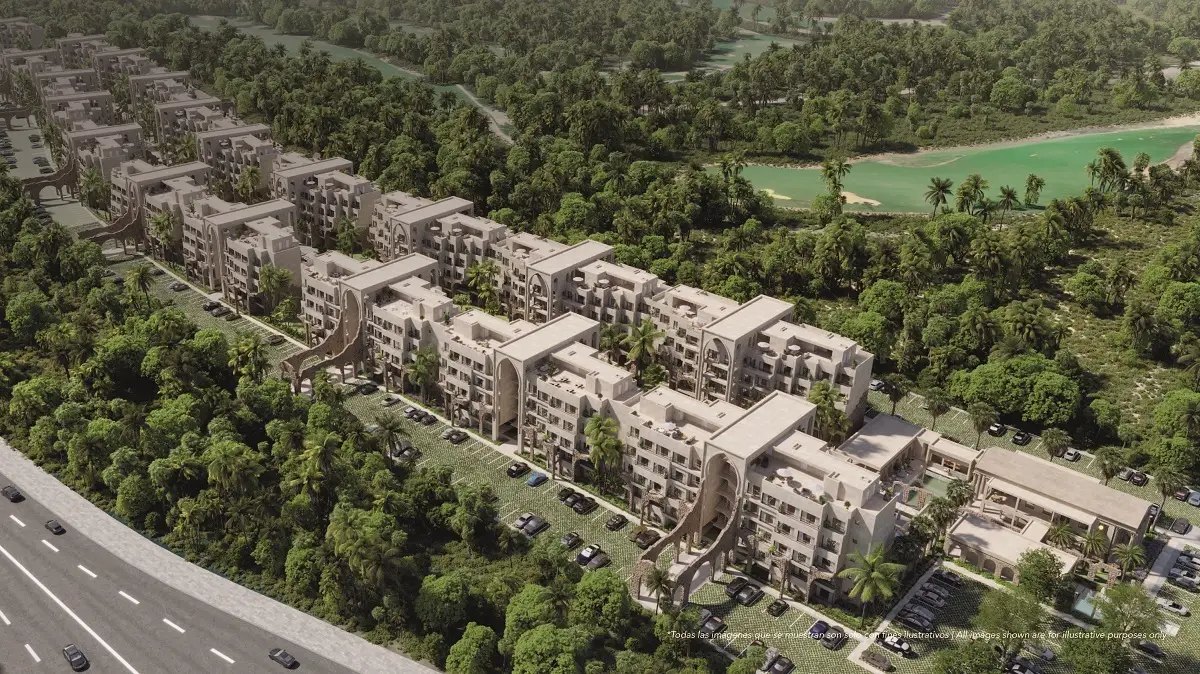
Poseidonia is a community of 1,319 residences inside gated Cana Bay, priced from $179,000, with 20+ pools across the site and delivery projected for 2028. The drive times it publishes are to the serviced sand at Arena Gorda, about 5 minutes away, the airport at about 25 and downtown Punta Cana at about 17. Macao is a different errand: roughly 4.7 miles up the coast, measured as a straight line from the property's coordinates to the beach's. Nobody publishes a routed door-to-door time for that trip, this page included, so drive it on your site visit and time it yourself.
The two beaches do different jobs, and an owner ends up using them differently. The serviced one near the door is the ordinary evening swim, the one you do without packing. Macao is a decision — a surf morning, a fish lunch on the sand, a Sunday among Dominican families, or the week the seaweed has beaten the strip and this bay has escaped it. Neither replaces the other, and a buyer who only ever hears about one of them is being shown half a coast.
One last thing that is easy to miss. Nothing at Macao belongs to this address, or to any address. It is public, kept by a municipality and a village rather than by a management company, and that cuts both ways: no owner can lose access to it, and no owner can have it improved. Most people are content with that trade once it is said out loud — which is the argument for standing on the beach for an hour before deciding what it is worth to you.
Common questions
- Is Macao Beach free, and can anyone go?
- Yes. There is no gate and no entrance fee, and the tourism ministry treats it as the principal public beach of this coast, with footfall it puts above 200,000 a year. You arrive by a public road to a public car park rather than through a hotel, both rebuilt by the ministry and finished in 2022 with 86 car spaces and 14 coach bays. Facilities are basic by resort standards and that is the character of the place, not a defect in it.
- Can you swim at Macao Beach?
- People swim here every day, and the sensible approach is to treat it as an open beach rather than a hotel pool. Lifeguards are posted by the municipality with the local fire service, and the beach is an operations centre during the holiday beach-watch; local reporting has also documented drownings and years when the team was short of people and equipment. No authority publishes wave data or a flag system for this bay, so read the water on the day, stay within sight of a staffed post, and never be the furthest person out.
- Is Macao a good place to learn to surf?
- It is where the schools are, because it takes more consistent wind and swell than the sheltered beaches south of it. Lessons run two hours with foam boards, rash guards and hotel transfers included; one long-established school publishes rates from $100 a person in a group and from $125 one-to-one. Expect a first ride in the whitewater rather than a finished technique, and confirm the price with the school before you turn up.
- Does Macao Beach get sargassum?
- Less often than the beaches south of it, because the bay faces north and a headland shields its eastern side from the current that brings the weed in. A travel resource that tracks the coast estimates Macao is affected roughly 10-20% of the time, with June to August the heaviest part of the year. Treat that as a tendency, not a promise: volumes vary year to year and no agency measures this bay.
- How far is Macao Beach from Cana Bay?
- About 4.7 miles up the coast in a straight line from Poseidonia's coordinates, which makes it a drive rather than a walk. No routed door-to-door time is published for it, so time the trip yourself on a site visit rather than trusting a figure from any page. The nearer sand at Arena Gorda, about 5 minutes away, is the everyday beach; Macao is the one you go to on purpose.
Want the details for your own situation?
Ask about availability, layouts or the buying process, and someone from the sales team will get back to you.
Get in touch