Dominican Republic vs Panama: Reading the Visitor Numbers Before You Buy
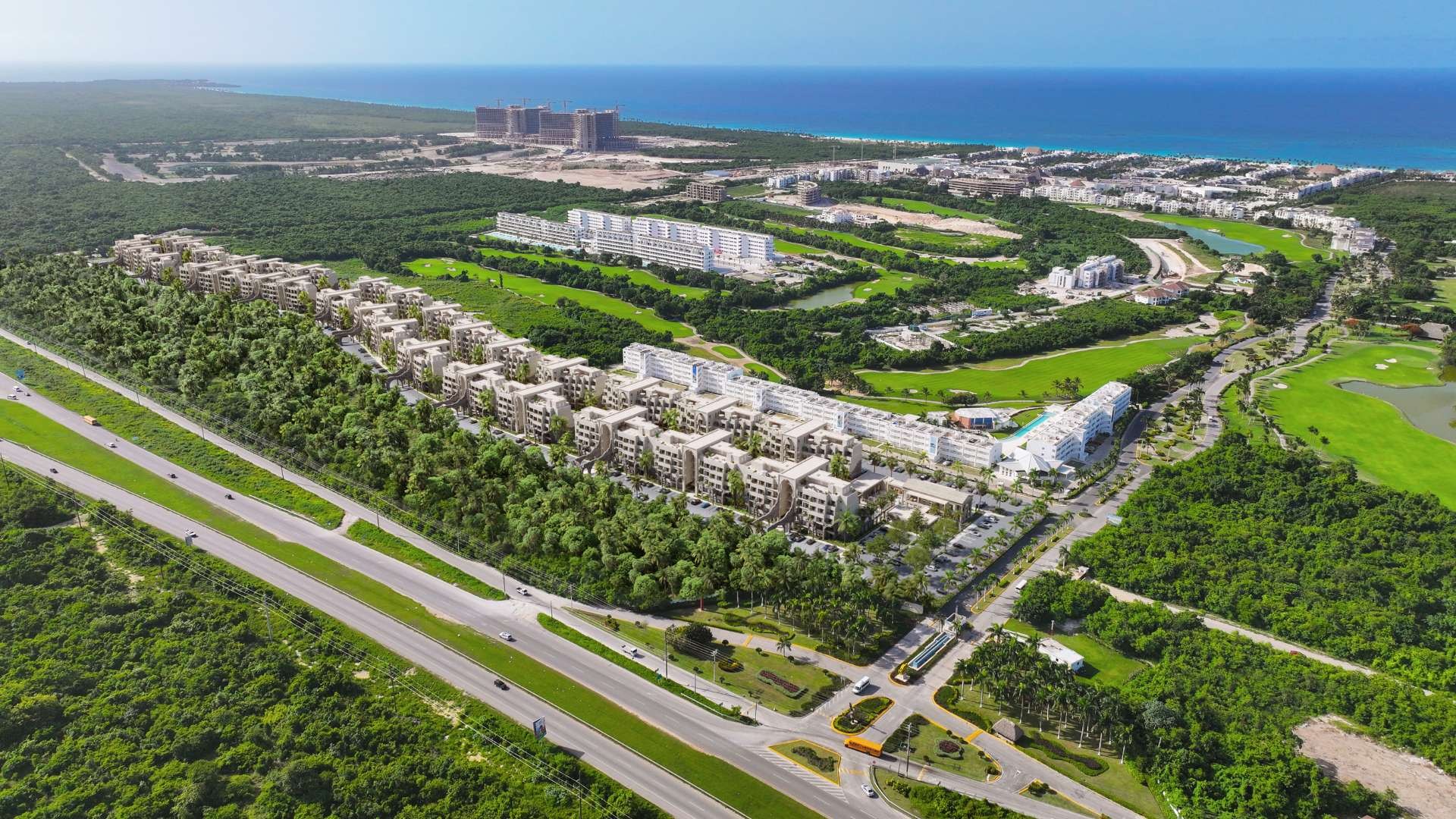
If the reason you are weighing the Dominican Republic against Panama is a residence that guests will pay to stay in, the two countries are not the same trade: one sells a holiday that lands overwhelmingly at a single leisure airport, the other sells a capital city that is also a banking and transit hub. In 2025 Panama's tourism authority counted 3,004,266 international visitors across every port of entry, while the Dominican central bank recorded 8,860,709 non-resident air arrivals, and 5,275,492 of those, 71.9%, came through Punta Cana International Airport. This page reads what those figures do and do not settle, written from the site of Poseidonia, a 1,319-residence development in Cana Bay.
Are you comparing two countries, or two different purchases?
Almost nobody types this comparison because they are indifferent between two flags. They type it because a purchase is already half-formed in their head and they want to know which country produces it more reliably. That is a narrower question than it looks, and it splits early. A residence bought to live in, bank from or run a business out of is judged on schools, hospitals, a commercial district and how the paperwork of daily life behaves. A residence bought so that visitors can pay to stay in it is judged on something almost unrelated: how many people arrive, where they arrive, why they came, and how long it takes them to get from the aircraft door to yours.
This page answers only the second version of the question. It is published on the website of a development in the Dominican Republic, so read it as an argument rather than a referee's scorecard, but as an argument you can check: every figure below is published by a government body or an airport authority and is named with its source. Where the numbers do not support a conclusion, it says so instead of reaching for one anyway. There is more of that here than a comparison page usually admits to.
What the 2025 visitor figures say, and what they cannot
Both governments count their visitors and both published a figure for 2025. Panama's tourism authority reported 3,004,266 international visitors for the year, a rise of 8.4%, with 2,244,078 of them passing through Tocumen. The Dominican central bank's tourist-flow report for the same year recorded 8,860,709 non-resident arrivals by air, of which 5,275,492 entered at Punta Cana International Airport, or 71.9% of the national total.
The two headline totals are not measured the same way, and dividing one by the other produces a number that means nothing. The Panamanian count includes cruise passengers and the land crossing at Paso Canoas as well as air travellers; the Dominican figure counts arrivals by air alone. A ratio built from those two is a ratio of two different questions. The nearest fair pairing is airport against airport, Tocumen's 2,244,078 beside Punta Cana's 5,275,492, and even that is approximate, because the two authorities do not define an arriving visitor identically. Both numbers appear below with their basis attached rather than as one tidy multiple, because the multiple would be the easiest line to quote from this page and also the least true.
| Measure, 2025 | Figure | What it counts, and who published it |
|---|---|---|
| Panama, international visitors | 3,004,266 | Every port of entry: airports, cruise terminals and the land border. Panama's tourism authority. |
| Panama, visitors through Tocumen | 2,244,078 | The airport component of the national total in the row above. |
| Dominican Republic, air arrivals | 8,860,709 | Non-resident arrivals by air only, from the central bank's tourist-flow report for the year. |
| Punta Cana International Airport | 5,275,492 | 71.9% of the Dominican air arrivals above, from that same central-bank report. |
Concentration, not the headline total, is what an owner is buying
A national visitor total is a fact about a country. What reaches one specific rental unit is the share of those visitors who land near it and intend to stay, and there the two markets diverge sharply. Panamanian arrivals spread across a capital-city airport, cruise terminals and a land border, and a great deal of what moves through Tocumen never enters the country at all: about three-quarters of the airport's monthly passenger movement in 2026 was transfer traffic, 75% of it in July. Dominican leisure demand does the opposite. In 2025, 71.9% of the country's foreign air arrivals came through one airport on the eastern coast, and they came to be on holiday.
That concentration is what shortens the distance between a market statistic and a booking. Poseidonia sits inside the gated Cana Bay community, about 25 minutes from that airport, roughly 17 minutes from downtown Punta Cana and 5 minutes from Arena Gorda Beach. A traveller who has flown in for a beach holiday will accept a short transfer to a residence with more than 20 pools, a Jack Nicklaus-designed golf course beside it and the Cana Bay Beach Club nearby. The same traveller, landing in a capital to change planes, is not in the market for any of it. Neither country is doing anything wrong here; they are selling to different people, and what you are buying is the customer rather than the flag.
Three things Panama does better than this coast
A comparison written by one side is worth reading only if it can name where the other side wins. Three of those are real, and on none of them is it close:
- Everyday currency. The US dollar circulates in Panama as ordinary money, so a North American owner never meets a national conversion step at all. The Dominican Republic runs its own peso alongside dollar-quoted resort pricing, and that is a genuine difference in daily friction rather than a detail to wave away.
- A real metropolis. If what you want is a base with a financial district, corporate offices and a year-round urban tenant pool, that is a city product, and Panama City is a city. No resort community in Punta Cana competes with it, and pretending otherwise would be the quickest way to lose your trust.
- Reach into South America. Tocumen's connecting network runs deep southward, which is the flip side of that transfer share. If your family, your work or your travel habits point that way, the connectivity is worth more to you than any arrivals figure quoted here.
If one of those three is the reason you are looking, nothing further down this page will change your mind, and it should not.
Five questions that settle a shortlist faster than a country comparison
Country-level pages, this one included, argue about averages. What you will actually own is one unit, in one community, with one operator and one hand-over date. These five questions move the decision from the country to the asset, and they work identically whichever side of the shortlist you point them at. Ask them of us, then ask them of whatever you are weighing us against; the answers will separate the two lists faster than any national statistic.
-
Where does your guest land, and how far is the door?
Ask for the drive, not the distance on a map. Poseidonia is about 25 minutes from Punta Cana International Airport, the airport 71.9% of Dominican foreign air arrivals used in 2025.
-
Why did that traveller come?
A holiday arrival and a connecting business traveller want different weeks, different stay lengths and a different residence. A national total will not tell you which one you are inheriting; the airport and the community around the unit will.
-
What does the community already provide?
This is the part a spreadsheet misses. Cana Bay carries a Jack Nicklaus-designed golf course, the Cana Bay Beach Club and a racquet club, and Poseidonia adds more than 20 pools of its own inside the gates.
-
Who runs it when you are not there?
At Poseidonia the optional rental programme is run by Aston Hotels, and joining it is the owner's choice. Whatever you compare this with, ask who the operator is and what the owner is actually agreeing to.
-
When does it hand over?
Poseidonia is projected to deliver in 2028, which makes it a different asset from something lettable next season. Prices start at $179,000. A hand-over date belongs in the comparison, not in the small print.
What this page deliberately does not compare
Three things a reader might reasonably expect are missing, and each is missing on purpose. Tax. We hold sourced Dominican statute on this desk and no equivalent sourced Panamanian figure, and a comparison with one side researched and the other guessed is not a comparison, it is an advertisement with a table in it. Put the same questions to a tax adviser in each country and the ranking becomes yours, made on facts. Cost of living. The gap between a capital city and a coastal town is wider than the gap between the two countries, so a national average would describe nobody's budget, least of all yours. Safety. No government publishes figures at the granularity this comparison would need, and inventing them is not an option.
One further limit belongs here rather than in a footnote. Visitor totals describe a market; they do not forecast a unit. The 12-14% shown elsewhere on this site is a projection and not a guarantee, and the right response to any number of that shape, ours included, is to ask what stands behind it before relying on it. What is not a projection is where 5,275,492 people landed last year, which is why this page is built on that figure rather than on a yield.
Common questions
- Which country received more visitors in 2025?
- The Dominican Republic, on the figures the two governments published, but the counts are not like-for-like and the gap should never be quoted as a multiple. Panama's tourism authority reported 3,004,266 international visitors across all ports of entry, up 8.4%; the Dominican central bank recorded 8,860,709 non-resident arrivals by air alone. If you want the nearest thing to a fair pairing, compare the airports: 2,244,078 through Tocumen against 5,275,492 through Punta Cana.
- Does a bigger national visitor number mean a better rental?
- No, and treating it that way is where this comparison usually goes wrong. A national total says nothing about how many of those travellers pass within reach of one building, or whether they came to holiday or to change planes. What moves a booking is concentration, the transfer time from runway to door, and who is running the residence while you are elsewhere.
- Why will this page not tell me which country has better property taxes?
- Because only one half of that comparison is sourced here. The Dominican position rests on published statute that can be cited; no Panamanian rate on this desk traces to a primary or corroborated source, and printing one anyway would mean inventing the more important half of the answer. Ask a tax adviser in each country for the purchase tax, the annual tax, the treatment of a non-resident's rental income and how far the country's tax net reaches, then rank the two yourself.
- What is really being compared when someone says Punta Cana or Panama City?
- A resort community against an urban block, which is why the country framing misleads. Poseidonia is 1,319 residences inside gated Cana Bay, from $179,000, projected to deliver in 2028, about 25 minutes from the airport that handled 71.9% of the country's foreign air arrivals in 2025. A Panama City apartment is a share of a metropolitan rental market with year-round urban tenants. Decide which asset you want first, and the country follows from that.
Want the details for your own situation?
Ask about availability, layouts or the buying process, and someone from the sales team will get back to you.
Get in touch